One stay, from the guest’s side and the front desk’s.
No feature list tells a hotelier what a Tuesday in July is actually like. Here are five moments of an ordinary stay, and what changes at each when the information reaches the person looking for it.

After the booking
The hotel in their hand before they pack.
01Three weeks before
The booking is made, and then nothing happens
A family books four nights in July. The confirmation arrives from the channel they booked through, and after that the hotel is silent until the day they arrive. In those three weeks the guest has ten small questions and no obvious place to put them: can we get in before three, is there a cot, how far is the beach really, is the restaurant open on the Monday.
Some of them email. Most do not, and arrive having guessed. The ones who guessed wrong are the ones who are disappointed by lunchtime on the first day, before the hotel has done anything wrong.
A link sent after booking changes that. The hotel is in their hand before they pack — the rooms, the restaurants, the spa, what there is to do — and the questions get asked and answered while there is still time to act on the answers.

Sent ahead
- The passport
- The card
- The police slip
The desk prints the form instead of typing it.
02The first hour
Arrival is a queue or a greeting
Twenty people land off the same transfer. Two people are behind the desk, and each check-in is the same conversation plus a form: the passport, the card, the police slip, the explanation of where breakfast is and when the shuttle runs.
When the arrival details and the documents were sent ahead, the desk prints the form instead of typing it, and the conversation becomes the only part that needed a person in it. The guest who was going to ask where breakfast is has already read it on their phone in the taxi.
This is the hour that decides how the rest of the stay is spoken about. It is also the hour a hotel has the least capacity to spare.
Half past nine
- Extra towels → housekeeping
- A table for two → the restaurant’s own list
- The hammam → what the spa itself wrote
Without passing through the desk.
03The second evening
They want something, and it is half past nine
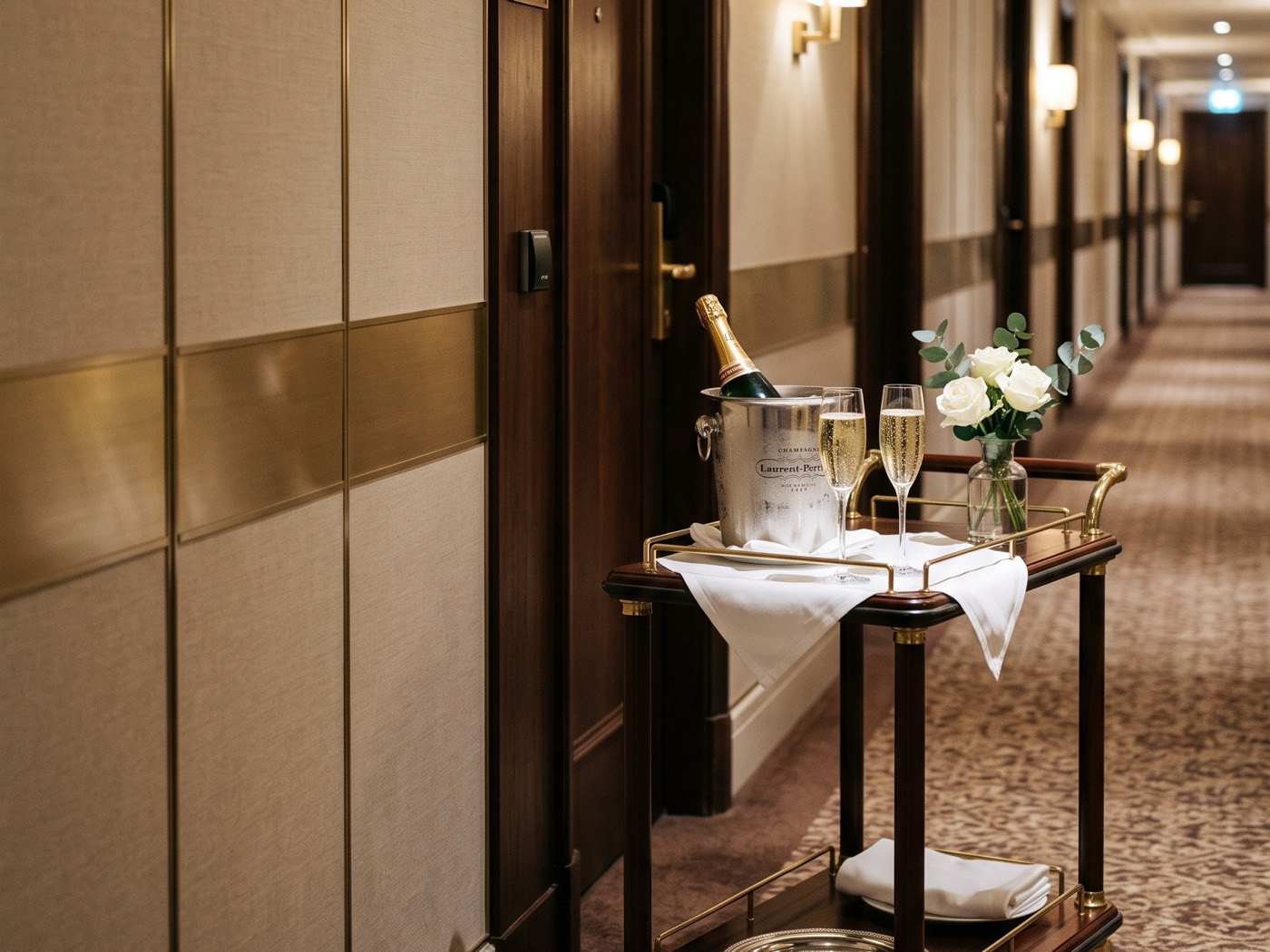
Extra towels. A table for two tomorrow at eight. Whether the hammam takes walk-ins. What is on at the theatre tonight. Four requests, four different departments, and one telephone at reception that is already engaged.
Each of those is answered or routed without passing through the desk: the question about the hammam is answered from what the spa itself wrote, the table is booked into the restaurant’s own list, the towels become a request that reaches housekeeping rather than a note on a pad.
None of this removes the staff. It removes the queue in front of them — which is the thing that was stopping them doing the part only a person can do.
Before they go
“Was everything all right?”
- Fixed, or acknowledged, on the day
- Rather than a review a week later
04The morning they leave
Something went wrong on the third night
The air conditioning in 412 was loud and they did not say anything, because saying something means going downstairs. They are going to say it somewhere, though, and the only question is whether it is to the hotel or to a review site a week later when nothing can be done.
Asked while they are still in the building, most of them will say it to the hotel. That is a complaint that can be fixed, apologised for, or at least acknowledged — and an apology given on the day is worth more than a reply typed under a one-star review.
The ones who had a good stay get asked too, and are pointed at the site the hotel chooses rather than the one that happens to email them first.

What the hotel kept
- The room they liked
- The allergy
- The hour they take breakfast
Because it kept that, rather than the booking channel.
05Next summer
They come back, and the hotel remembers
The same family books again. The hotel knows the room they liked, the allergy, the hour they take breakfast and that the youngest is afraid of the lift — because it kept that, rather than the booking channel keeping it.
That is the whole argument for a guest record the hotel owns. Not loyalty points: knowing someone on the second visit, which is what an independent hotel has instead of scale.
Every one of those moments rests on the same set of tools, described one by one elsewhere.